
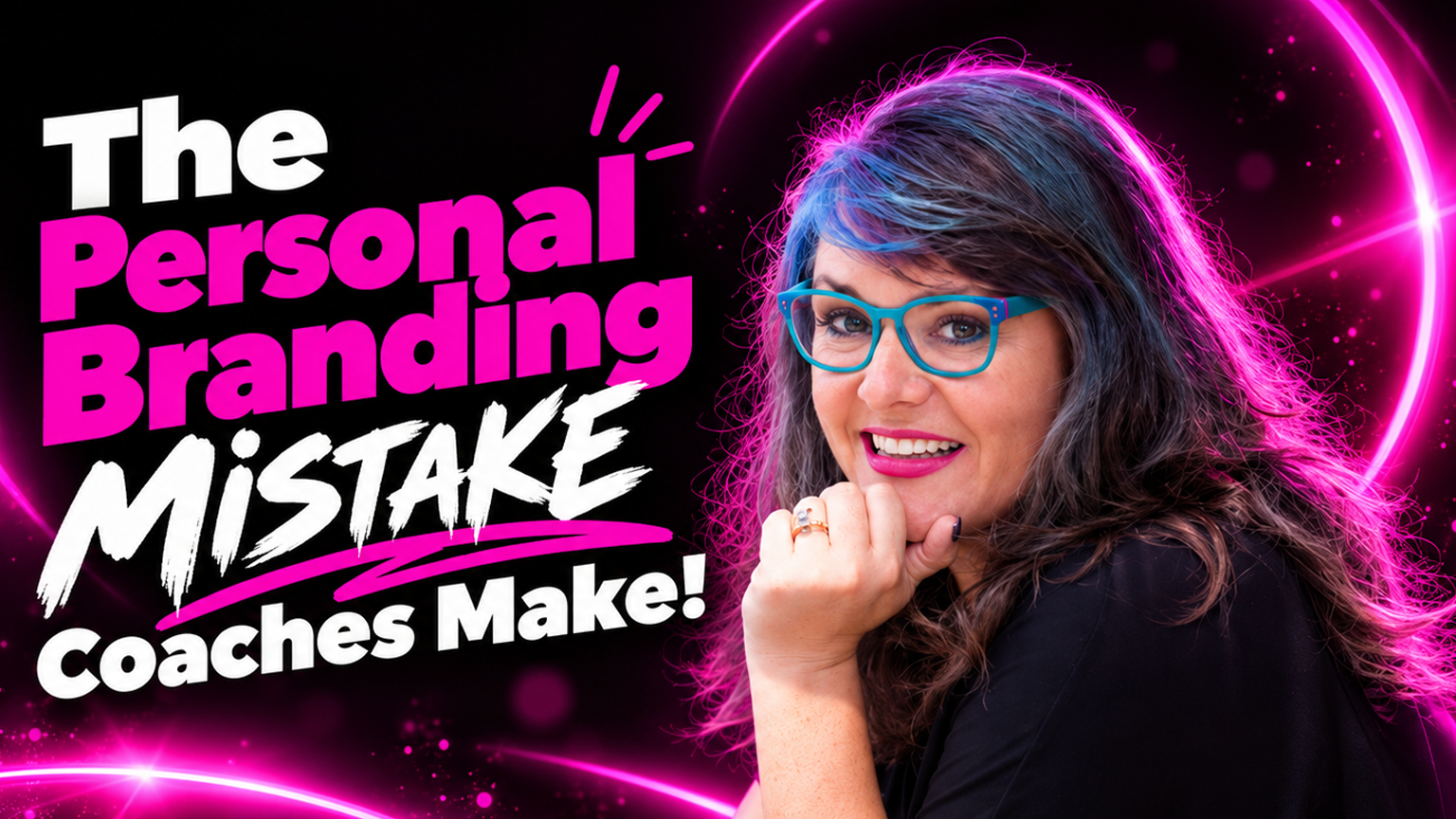

What Is the Biggest Personal Branding Mistake?
The biggest personal branding mistake is hiding the actual person behind the brand. Coaches, consultants, and creators polish away their stories, opinions, and quirks to look “professional” and end up sounding like everyone else in their niche. People hire people they feel they know. If your audience can’t see you, they can’t choose you.
Here’s what you need to remember. Personal branding builds trust and credibility with audiences, and strong personal branding increases visibility and recognition across every channel you touch. A whopping 84% of people trust personal recommendations over ads, which means your personality and point of view outperform any advertising campaigns you could run.
Playing it safe makes you forgettable, and forgettable doesn’t get hired. Effective personal branding can lead to career growth and job offers you never even applied for.
Personal branding influences perception in professional settings, from speaking invitations to networking opportunities. Your stories, opinions, and quirks are what make people trust you faster. Consistency beats perfection. And in 2026’s noisy online communities, a strong personal brand also helps AI tools like ChatGPT, Perplexity, and Claude recognize and recommend you to new audiences.
Key Takeaways
- The biggest personal branding mistake is hiding the real you to look “professional.”
- Your personal brand isn’t your logo or your colors. It’s the feeling people get when your name comes up.
- Playing it safe makes you forgettable, and forgettable doesn’t get hired.
- Your stories, opinions, and quirks build trust faster than polished content ever will.
- Five signs you’re hiding:
- your captions don’t sound like you
- you share tips but never stories
- you avoid opinions
- your face is missing
- you’re copying someone else’s vibe
- Fix it without oversharing. Pick three brand pillars, build a story bank, take a clear stand, and show your face every week.
- Consistency beats perfection. Show up as yourself on every platform, every week.
- Use AI tools like Claude as your backstage crew, not a mask. Feed them your stories and voice first.
- A strong, authentic brand also helps answer engines like ChatGPT, Perplexity, and Claude recognize you and recommend you.
Table of Contents
What a Personal Brand Actually Is (and Isn’t)
Personal branding is the strategic practice of defining and expressing professional value. It’s your unique identity and reputation. It encompasses values, mission, vision, and communication style. And it is an ongoing process of building a public persona that aims to establish authority and differentiate from competitors.
Your personal branding is not a mood board, a font, or a perfectly filtered grid. It’s the feeling people get when your name comes up. According to a systematic review of 100 academic papers, personal branding is best understood as “a strategic process of creating, positioning, and maintaining a positive impression of oneself, based in a unique combination of individual characteristics.” A unique personal brand creates a compelling value proposition, and identifying your unique value proposition is essential for crafting your personal brand.
Myth: Your brand is your logo and color palette. Reality: Your brand identity lives in your stories, your brand voice, and how you make people feel. Visual identity matters, but the person is the brand.
Myth: You need a viral post to build a personal brand. Reality: Values shape behavior and create a consistent brand image. Maintaining a strong online reputation is crucial for personal branding, and a well-defined personal brand assists in controlling your professional narrative across social media sites, search engines, and AI-powered discovery tools.
Every coach and creator already has a personal brand online, whether you built one intentionally or not. Your social media posts, your LinkedIn profile, your personal website-they all tell a story. The question is whether that story sounds like you.
Five Signs You’re Hiding Behind Your Brand
1. You’d never say your captions out loud. If your social media posts sound nothing like you on a Zoom call, your audience is meeting a stranger. Authenticity in branding builds trust and credibility with audiences. A focused message simplifies understanding of your value by others, and stiff corporate-speak does the opposite.
2. You only share tips, never stories. Tips teach. Stories connect. You need both. Consider that 96% of consumers distrust ads and prefer personal recommendations. Your real stories function like personal recommendations from a trusted friend.
3. You avoid having opinions. If nobody could disagree with you, nobody will remember you either. Middle-of-the-road content disappears in the news feed. Personal branding helps differentiate you from other candidates in a crowded job market, and opinions are what set you apart.
4. Your face is missing. A 2025 study found that simply including a human face increased conversion rates by about 7% compared to using default images. People want to see the human behind the brand. Short videos and selfies outperform Canva graphics for building a strong connection.
5. You’re copying someone else’s vibe. Building relationships is more valuable than merely increasing follower counts, and clone brands don’t build relationships. Consistent sharing of insights builds credibility and trust with your audience, but only when those insights come from your unique personality and experience.
Screenshot this list. Audit your last ten social media posts against it.
How to Fix Your Personal Brand (Without Oversharing)
You don’t have to post your whole diary. You just have to share on purpose. Effective personal branding requires clear positioning and consistent execution. Here’s a simple personal branding strategy you can start this week.
Find your three brand pillars. Pick one expertise pillar, one core values pillar, and one personality pillar. Define your brand values to establish an authentic identity. For me? AI content and social selling. Fun as a business strategy. And Broadway energy. Create a personal brand value proposition to differentiate yourself from like-minded people in your niche.
Build a story bank. Write down ten stories from your life and business-wins, fails, weird moments, client breakthroughs. Audit your existing brand to identify gaps and inconsistencies, then fill them with real stories. Identify your target audience to tailor your messaging so every story serves a purpose.
Pick one hill to stand on. What do you believe that most industry experts in your space get wrong? Say it out loud. That’s your unique selling point. That’s what potential customers remember.
Show your face regularly. Go live once a week. Post two selfie-style short videos. Share one behind-the-scenes photo. Visual and textual consistency across platforms helps with brand recognition, and your visual identity should align with your personal brand values and mission. Consistent messaging across platforms builds trust and credibility.
Use AI as your backstage crew. Using AI tools can streamline content creation and improve digital strategy. I use Claude to organize ideas and turn one story into a week of content, but the stories always come from me. Build an online presence to increase visibility and awareness by feeding AI your stories, your brand voice, and your vision statement first.
Here’s a workflow: record a three-minute story → transcribe it → use AI to turn it into a LinkedIn post, Instagram caption, email intro, and a script for a 30-second Reel. Engage authentically with your audience to build connections, even when AI helps with the drafting. A strong personal brand can lead to career growth and job offers when you stay consistent with this process.
Building Your Personal Brand
Frame your ecosystem around one hub and several social media channels. Your personal website is home base-bio, offers, media page, lead magnet, speaking page-with consistent brand identity elements. Track website traffic to measure audience engagement and use Google Analytics for insights on user behavior.
For social platforms, choose based on where your target audience and most active users spend time. LinkedIn works for B2B clients, job opportunities, and thought leader positioning. Instagram is ideal for product-based businesses and influencers who thrive on photo sharing and Reels. YouTube ads reached 30.9% of all people on Earth in January 2025, making it a powerful tool for authority-building video. TikTok drives discovery among young adults and younger users through short videos.
Social media allows direct access to potential clients and partners. Social media marketing can increase brand visibility and customer engagement across popular social media platforms. Participate in niche communities and online platforms where your people gather-LinkedIn groups, Reddit, paid masterminds-by answering questions and sharing user-generated content rather than spamming links to protect younger users and other users from low-value noise.
Engaging content demonstrates expertise and establishes authority. Regular audits of digital footprint enhance brand management. Regularly monitoring engagement metrics is essential for refining your brand strategy: analyze social media metrics like likes and shares, monitor podcast downloads to gauge audience interest, and set specific KPIs to evaluate branding effectiveness.
A recognizable ecosystem across other platforms makes it easier for industry experts, podcast hosts, and AI-driven search to discover your personal brand. Keep your social media presence and social media engagement aligned by adapting format for each platform while keeping your brand voice, energy, and opinions identical.
Frequently Asked Questions
What is the biggest personal branding mistake? Hiding the real you to look more professional. When you remove your personality, stories, and opinions, you blend into your niche and become easy to forget. 84% of people trust personal recommendations over marketing tactics, so your real voice matters more than polish.
Do I need to show my face to build a personal brand? Not strictly required, but it helps enormously. People trust faces faster than logos. Even a few real photos or a quick video each week from your Instagram account or other social media accounts makes a measurable difference in how potential employers and clients perceive you.
How do I build a personal brand without oversharing? Share on purpose. Choose stories that connect to your message or your audience’s struggles. You decide what stays private. This protects your mental health while still building trust.
How long does it take to build a personal brand? You’ll often feel a shift in social media engagement within weeks of showing up consistently. Maria Malik grew from 2,500 to 100,000 LinkedIn followers in 5.5 months by posting daily with vulnerable stories. A strong, recognizable brand and steady job offers build over months of effort. Start creating now, and stay consistent.
Is a personal brand different from a business brand? Yes. A business brand is about the company. A personal brand is about you, your voice, and your point of view. For coaches, consultants, and young people building solo businesses, the two overlap heavily. Either way, you need professional goals and a content strategy that future proof your visibility.
Can AI help me build my personal brand? Absolutely, as a helper, not a replacement. Tools like Claude and ChatGPT can speed up drafting, repurpose valuable content, drive organic traffic, and help you reach new audiences on popular social media platforms. But according to research on AI-driven discovery, 47% of consumers say AI tools will most shape how they discover brands-meaning your content needs to carry your real voice so AI surfaces the real you, not inaccurate information. Feed it your stories first, and it can even help with competitive analysis and industry trends.
Make Your Content Unmistakably Yours
Pull up your last five social media posts.
Ask yourself one question.
“Could anyone else in my industry have posted this?”
If the answer is yes, rewrite one of them this week.
Add a story.
Add an opinion.
Add a little weird.
Your personal brand isn’t built on perfect content.
It’s built on honest content that only you could create.
And here’s the good news… You don’t have to do it alone.
Inside AI Content Club, I show you how to use AI to create content that sounds like you, not like a robot.
We turn your stories, opinions, and quirks into posts your dream clients actually stop for.

Leave a Reply