

What Is Organic Marketing Today?
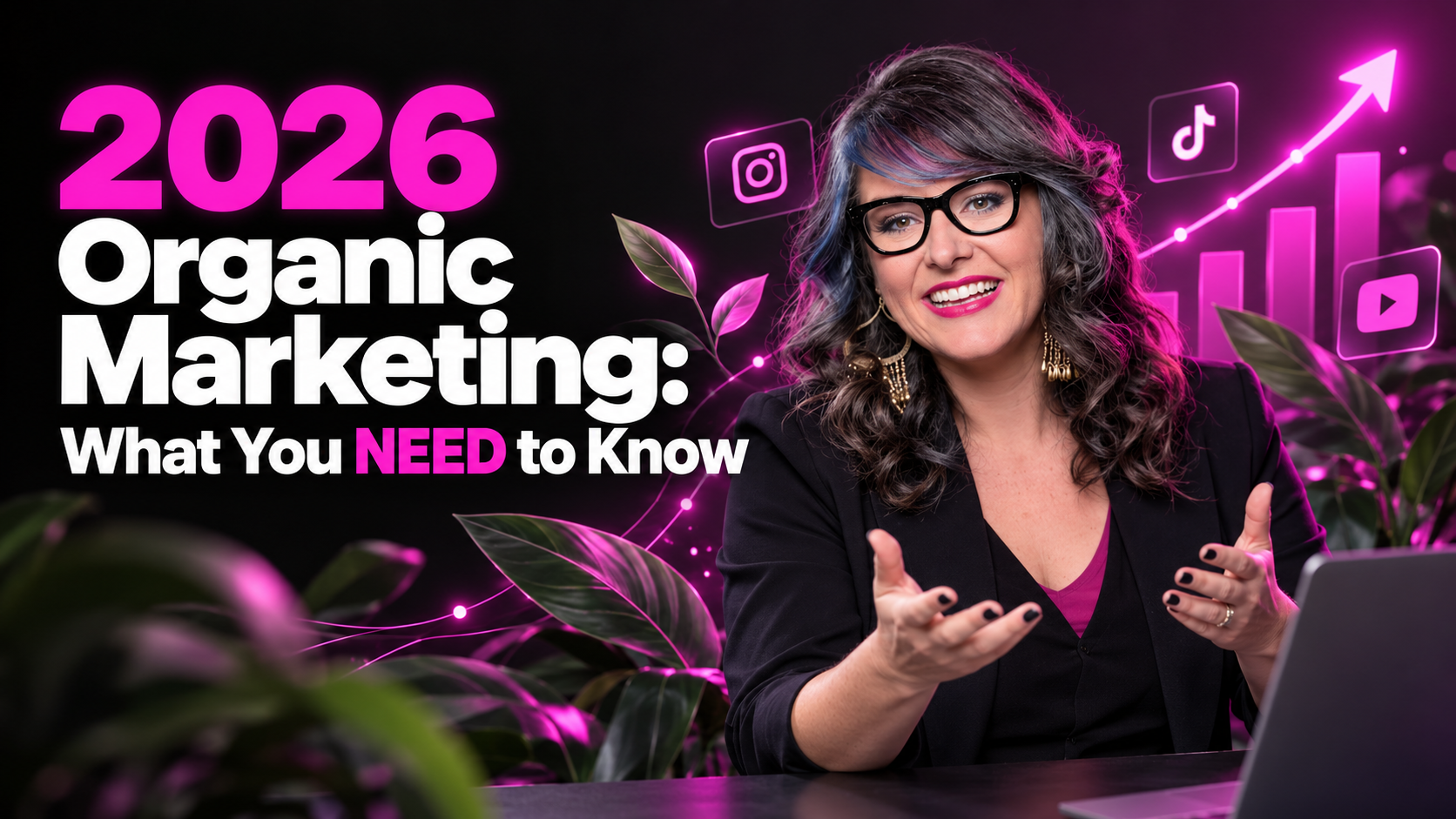
Organic marketing used to mean “post often and hope for the best.” In 2026, the rules are different. AI answers questions your audience used to scroll for. Raw video outperforms studio content. And conversations close more sales than reach ever did. Here are the rules that matter now and a step-by-step plan for putting them to work.
The difference between an organic marketing strategy and isolated organic marketing tactics is simple: a strategy ties content, offers, and follow-up into a repeatable system. A tactic is a single post or video with no plan behind it.
Between 2024 and 2026, the landscape shifted. Generative AI tools (ChatGPT, Perplexity, Google AI Overviews) now sit alongside Google as discovery channels. Short-form video on TikTok and Instagram Reels exploded in reach. Answer Engine Optimization (AEO) became a necessary layer over classic SEO techniques.
Organic marketing is not “free.” You still invest time, skill, and sometimes tools. But it compounds over time instead of resetting when ad spend stops.
Who This Is For
If you are a coach, consultant, or course creator and you feel stuck posting endlessly with little return, this guide was written for you.
This is for you if you are:
- An expert selling coaching, courses, memberships, or services
- Values-driven and uncomfortable with feeling “salesy”
- Interested in AI marketing tools but afraid of sounding robotic
- Ready to turn organic marketing efforts into real revenue
Key Takeaways
Here is the short version. Each rule is expanded later in the article.
- Visibility does not equal sales. Track conversations and conversions, not just views.
- Raw beats polished. Your imperfect face-to-camera video outperforms studio content.
- Aim for saves and shares. Produce high quality content people bookmark and forward.
- Keep links out of post copy. Invite comments or DMs to protect reach and start chats.
- Ask before you build. Use hand-raising posts to validate offers before creating content.
- Mix AI with real moments. AI drafts plus human stories keep content from feeling generic.
- Don’t copy-paste everywhere. Tailor each idea to the platform’s native style.
- Treat old posts as inventory. Repost, repurpose, and update proven winners.
- Answer questions people ask AI. Long-form articles and videos get cited by answer engines.
- Follow-up is the new posting. Conversations and nurture win more clients than volume.
Table of Contents
Why Organic Marketing Changed in 2026 (And Why It Matters)
ChatGPT launched publicly in November 2022. Google rolled out AI Overviews in 2024. By mid-2025, more than 35-40% of searches included AI-generated summaries instead of simple link lists. ChatGPT alone now has roughly 900 million weekly active users. The way people find answers changed at a speed few marketers predicted.
User behavior shifted in two directions at once. More people type “how do I find a business coach?” into AI tools instead of scrolling Instagram. Meanwhile, social feeds filled up with AI-generated carousels that all look and sound the same. One client described his LinkedIn engagement as “robots talking to robots.”
Every comment came from peers in his own industry, not from potential clients.
This matters for your business strategy because:
- Traditional SEO alone is not enough. You now also need AEO so that answer engines cite your content.
- Brand searches (your name plus “program” or “review”) have become more important as people validate experts before buying.
- Raw, reactive content (quick videos, screen shares, story posts) often beats scheduled, glossy campaigns because algorithms reward genuine interaction over passive social media broadcasting.
- Advertising costs rose across Meta and Google while privacy changes made tracking harder. Sustainable growth requires a brand that both people and algorithms trust.
You can see this shift in action by comparing classic SEO guides on Moz to newer AEO-focused content built for tools like Perplexity.
Organic vs Paid Marketing (And How They Work Together)
The simplest way to understand organic vs paid marketing: an Instagram Reel you post from your phone is organic. Boosting that Reel with $50 is paid. A YouTube tutorial that ranks in search is organic. A YouTube ad that plays before someone else’s video is paid marketing.
Organic marketing is a long-term, compounding asset. It builds trust, credibility, and relationships over months and years. Paid marketing requires financial investment to place ads in front of a targeted audience and provides immediate results, but those results are often temporary. Organic search accounts for 53.3% of total web traffic, and 70-80% of online users prefer organic results over paid ads. When your content earns its way to the first page, 67.60% of all clicks go to the first five organic results.
Both organic and paid marketing are complementary tools for reaching different marketing goals. At The Prepared Performer, paid marketing is used sparingly to amplify what already works organically: retargeting video viewers, scaling a proven webinar, or boosting a post that already generated strong engagement. Paid ads never replace organic content; they accelerate it.
Building an effective organic marketing strategy first is safer for coaches and consultants because it validates messaging, attracts aligned clients, and reduces the risk of paid marketing masking a broken offer.
How to Build an Organic Marketing Strategy Step by Step
- Clarify your offer and audience. Define exactly who you help, what problem you solve, and your main offer. Identify your best-fit buyers, not just any followers. Understanding user intent separates qualified leads from passive scrollers.
- Research questions and keywords. List the exact questions your clients ask in DMs and calls. Translate them into keywords using Google Suggest and AnswerThePublic. Mix “how to” phrases with intent-based long tail keywords (e.g., “organic marketing strategies for therapists”).
- Design your content ecosystem. Choose a primary long-form home (blog, podcast, or YouTube) plus one or two social media platforms where your buyers talk. Map content into “hero” pieces (webinars, deep dives) and “helper” pieces (reels, posts, emails) that point back.
- Create high quality, evergreen content. Publish at least one substantial piece per week that answers a clear question, optimized for SEO and AEO with headings, FAQs, and internal links. Include screenshots, case examples, and how to guides that increase saves and shares.
- Distribute and repurpose strategically. Smart content repurposing maximizes the reach of existing content across multiple channels. Turn one long piece into multiple posts, stories, and emails, adjusting hooks per platform instead of copy-pasting. Use AI tools to speed up repurposing while keeping your brand voice human.
- Build in conversation paths. End most posts with a low-friction call to action: comment a keyword, reply with a question, or DM a phrase. This feeds DMs, email list growth, and sales calls.
- Measure, refine, and double down. Track weekly: conversations started, email subscribers added, saves and shares, reply rate to emails, and applications or booked calls. Prune what does not move those numbers. Double down on the formats, topics, and hooks that do.
10 Organic Marketing Rules
Rule 1: Visibility does not equal sales. A Reel can hit 50,000 views and bring zero qualified leads. Meanwhile, a simple text post from The Prepared Performer generated 10 DMs and 3 booked sales calls in the same week. Track conversations, not views.
Rule 2: Raw beats polished. A selfie-style video filmed on an iPhone in good light outperformed a professionally edited sizzle reel in both saves and DMs. Real equals revenue. As covered in Humanizing Your Brand in 2025, your face and your voice are your digital footprint.
Rule 3: Make content people save and send. Checklists, templates, script starters, and mini-swipe files drive saves. One unscripted video about an AI tool settings update pulled 161 saves and 75 shares because it was useful, not impressive. Share insights that solve a specific problem.
Rule 4: Keep links out of your post copy. Social media platforms want users to stay. Links in post copy lower reach. Instead, ask for a comment (“Comment GUIDE”) and send the link by DM. This protects reach and opens a one-to-one relationship. For more on this, see 3 Genius Ways to Bypass Facebook’s Link-Sharing Limit.
Rule 5: Ask before you build. After winning best presentation on a marketing cruise, Molly Mahoney posted one line: “If 100 people want this, I’ll do an encore presentation.” That post got 396 comments. Nothing was built until the hands went up. Read the full breakdown in Small Content Strategy That Made $90K Without Going Viral.
Rule 6: Mix AI with real moments. AI is a game changer for batching ideas, outlining, and repurposing. But AI without soul is spam. Post one or two unfiltered, behind-the-scenes moments each week with zero AI involved. For a practical workflow, see How to Create a Simple AI Content Workflow.
Rule 7: Stop copy-pasting everywhere. A written post about social selling on LinkedIn pulled paragraph-length comments from companies asking about services. The same idea reformatted as an Instagram carousel with shorter copy and visual hooks performed well on Instagram but for different reasons. Tailor the hook, format, and call to action per platform.
Rule 8: Your old content is inventory. One week, the best-performing reel at The Prepared Performer was a repost of old content. Most of your target audience never saw your best post the first time. Audit your last 12 months, identify 10 top performers by saves or replies, and schedule them again with updated hooks.
Rule 9: Answer the questions people ask AI. AEO means creating content that AI tools can find, understand, and cite. Start with the exact questions potential clients ask. Publish one long article plus a 10-20 minute YouTube video per core FAQ.
Rule 10: Follow-up is the new posting. No new content. Just follow-up. A simple daily habit: reply to every comment with a question, message anyone who commented your keyword, check in with one person who showed interest but did not buy, and wish someone a happy birthday. Conversations lead to conversions.
How AI Fits Into Organic Marketing (Without Losing Your Voice)
“I don’t want to sound like a robot.” This is the most common concern from coaches exploring AI for content creation. The concern is valid. AI without your voice produces generic output that erodes trust.
Where AI shines:
- Topic and keyword ideation for blogs, YouTube, and social media content
- Drafting outlines and first passes of posts, scripts, and email sequences
- Repurposing long-form content into multiple shorter assets across online platforms
Our approach is to train AI on a “voice file” containing your phrases, stories, frameworks, and opinions. Humans then add personal anecdotes, customer feedback snippets, and fresh success stories before anything goes live. This is the method taught inside The AI Content Club.
Frequently Asked Questions
Why is organic marketing important in 2026? Organic marketing builds long-term credibility, trust, and brand value. It costs less over time than paid ads, works with AI search and answer engines, and creates a digital footprint that compounds. Organic marketing fosters deeper engagement with targeted audiences because people choose to consume your content rather than being interrupted by it.
What is organic growth in marketing? Organic growth is the natural increase in visibility, leads, and revenue driven by non-paid tactics and customer relationships. It includes search rankings, word of mouth, referrals, and social media content that attracts new customers without ad spend.
What is an organic marketing strategy? An organic marketing strategy is an integrated plan combining SEO, evergreen content, social media, email marketing, and follow-ups, all working toward revenue goals. It differs from random posting because every piece of content connects to an offer and a conversation path.
How do you drive organic marketing if you’re just starting? Start with one platform, one email list, and one weekly long-form piece. Spend 20 minutes a day on customer engagement: answering comments, replying to DMs, and starting conversations. Consistency on a single channel beats scattered more effort across five.
How long does organic marketing take to work? Expect early signals (DMs, email subscribers, saves) within 60-90 days. Strong compounding results typically appear in 6-12 months. If you already have an audience, results come faster because you are activating existing relationships.
Is organic marketing better than paid marketing? Not universally. Paid marketing provides immediate results but may be temporary. Organic is the more sustainable base. The best marketing strategy combines both: organic for trust and authority, paid ads for acceleration. Organic marketing is important because it validates your messaging before you spend money amplifying it.
What are some top organic marketing strategies for local businesses and personal brands? Local SEO, community events, collaborations, guest blogging, public relations, and referral programs. For personal brands, add face-to-camera video, email marketing, and social selling. You can also explore tools for learning SEO techniques at the Ahrefs blog; just remember that marketing tools support strategy, not replace it.
What should I track to know if my organic marketing performance is improving? Track conversations started, email subscribers gained, applications received, and recurring revenue. Do not rely on followers or likes alone. Valuable information comes from measuring what leads to sales, not what leads to dopamine.
Recommendation
Days 1-30 (Foundation and clarity): Clarify your offers, audience, and messaging. List the top 20 questions your clients ask. Choose your primary content platform and one or two social media platforms. Build or refine a basic website or landing page with a simple email opt-in and one lead magnet aligned with your biggest question cluster.
Days 31-60 (Evergreen content and engagement): Publish one long-form piece per week (blog or YouTube), optimized for SEO and AEO, plus three to five supporting social posts. Begin a daily 20-minute engagement routine: answering comments, replying to DMs, starting three to five new conversations, and testing one ladder post to attract new talent and new customers to your world.
Days 61-90 (Amplify and systematize): Identify your highest-performing topics and formats. Repurpose them. Schedule reposts. Test a simple hand-raising campaign into a low-ticket or high-ticket offer. Set basic tracking: a weekly spreadsheet with conversations, email subscribers, applications, and revenue linked to organic sources. Adjust your business strategy based on numbers, not feelings.
Final Summary
- Organic marketing in 2026 is conversation-driven, not volume-driven. Creating content that is raw, useful, and structured for both humans and AI search wins.
- AI tools accelerate your marketing efforts when trained on your voice. Without your voice, they produce noise.
- Answer engines are a new discovery channel. Long-form, structured content gets cited. Shorts get reach. You need both.
- Follow-up closes more sales than any single post. Companies that treat conversations as their primary metric outperform those chasing impressions.
- Your stories, your face, and your voice are the moat algorithms cannot copy.
- For self-starters: Implement the 90-day plan above. Start this week with one raw video and one ladder post. Follow up with everyone who responds.
If you are ready to build an organic marketing system that turns AI-powered content into real conversations and premium clients, apply for Multiply and tell us where you want your organic growth to be from now.


Leave a Reply