

What Is An Activation Offer?
An activation offer is a short, interactive experience that does something useful for a prospect in under two minutes and hands them a logical next step while they are still paying attention.
Unlike a lead magnet, which transfers information, an activation offer produces a result specific to that person’s situation. A quiz that scores their setup. A calculator that shows what a gap is costing them. A mini app that reviews something and tells them what is broken.
The difference is not format. It is signal. A lead magnet gives you an email address. An activation offer tells you which email addresses matter.
Who This Is For
You are a coach, consultant, agency owner, or course creator with a lead magnet on your site and a list that grew while your calendar did not.
People download the thing. Then nothing. No replies, no bookings, and no way to tell the buyer apart from the browser.
You do not need more traffic. You need to know which of the people you already have are worth calling.
Key Takeaways
- A lead magnet is designed to capture an email address. That is all it was ever designed to do.
- An activation offer produces a personalized result, which creates the felt experience of value before any pitch.
- The measurable difference is signal: you learn who is hot instead of treating every opt-in identically.
- Interactive experiences get finished at far higher rates than PDFs get read.
- Validating the idea before building it is the step that separates a used app from an abandoned one.
- AI app builders like HighLevel’s AI Studio have made this buildable by non-technical people in under an hour.
- The best activation offer usually surfaces the exact problem your paid offer solves. Not a general topic. The specific problem.
Table of Contents
1. Why Do Lead Magnets Stop Working?
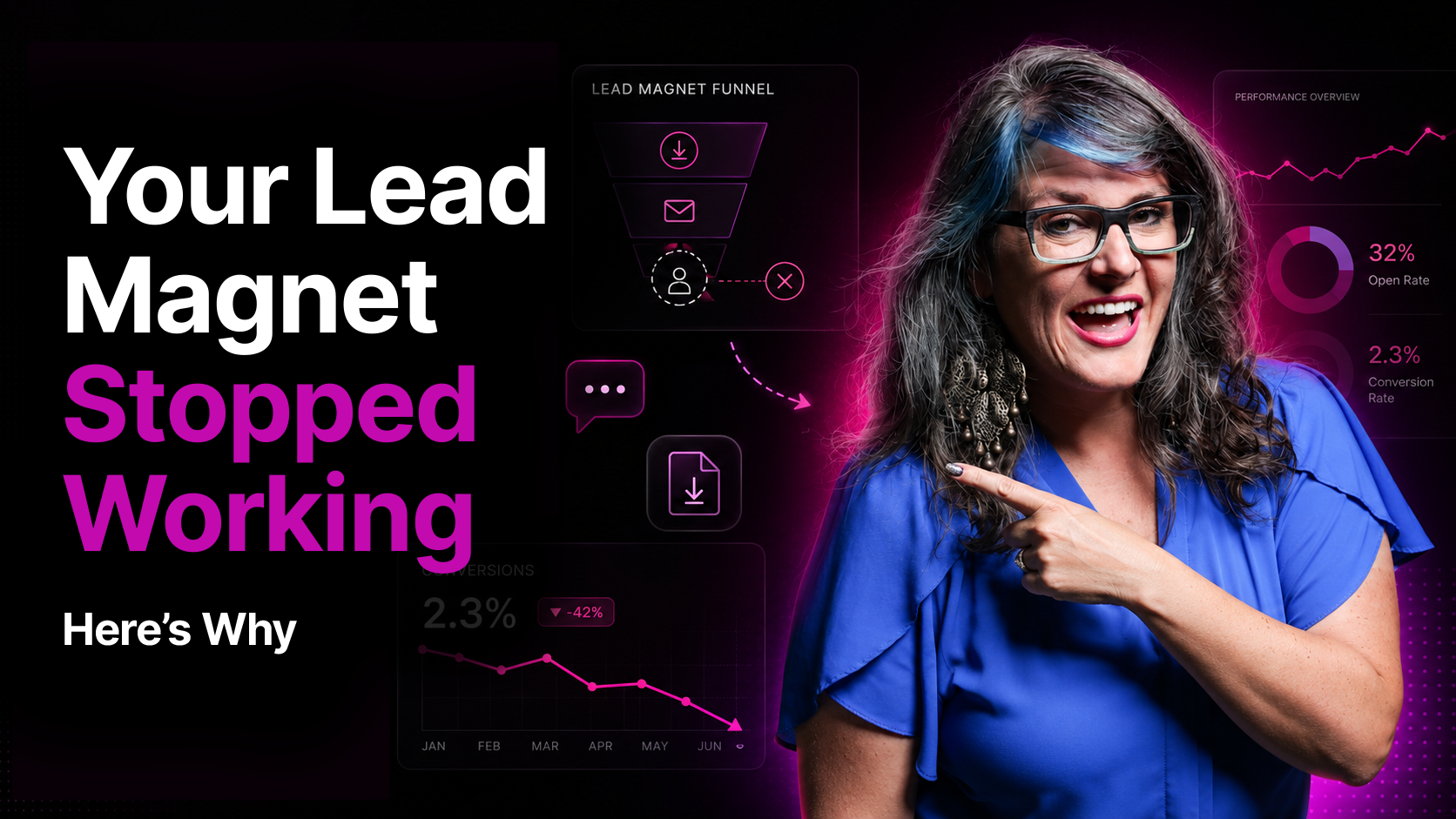
They did not stop working. They are doing exactly the job they were built for, and that job is smaller than you think it is.
A lead magnet was designed to trade information for an email address. It does that. Your list grows.
The problem is what happens next, which is nothing.
Here is the situation in most businesses right now. Three hundred people downloaded the PDF over the last quarter. In your CRM, they are indistinguishable. Same tag, same opt-in source, same automated welcome sequence.
One of those three hundred has the exact expensive problem your paid offer solves and is actively looking for someone to fix it this month.
You cannot see her.
So she gets email four of a nurture sequence instead of a phone call, and by the time you notice her, she has hired someone who did notice.
That is not a traffic problem. It is not an offer problem. It is a signal problem, and adding more lead magnets makes it worse rather than better.
2. What Is The Difference Between A Lead Magnet And An Activation Offer?
The difference is what the prospect walks away with.
A lead magnet gives them information. Ten tips. A checklist. A template. Generic by necessity, because it was written once for everybody.
An activation offer gives them a result about themselves. They put something in; it gives something specific back.
| Comparison | Lead Magnet | Activation Offer |
| What it provides | Information | A personalized result |
| Completion rate | Low — most are never read | High — interactive experiences are more likely to be completed |
| What you learn | Their email address | Their situation, answers, and urgency |
| Their state afterward | Curious, if you’re lucky | Activated — they’ve experienced the problem firsthand |
| Natural next step | You send email #1 | They ask what you’d recommend they do about it |
3. What Makes Someone “Activated” Instead Of Just Curious?
Experiencing the problem rather than reading about it.
Reading “most businesses lose leads in follow-up” is a fact. It happens to other people.
Watching a tool ask you six questions and then tell you that your follow-up gap is costing you roughly eleven leads a month is not a fact. That is your Tuesday.
The psychological shift is from abstract to personal, and it happens in about ninety seconds.
Someone in that state is not a lead you need to nurture. They are a person who just discovered a specific problem and wants to know what to do about it. The sales conversation has already started, and you did not have to start it.
That is why activation offers convert to calls at rates lead magnets do not touch. You are not persuading a stranger. You are answering a question they just asked themselves.
4. What Are Good Examples Of Activation Offers?
The strongest ones share a shape: quick input, personalized output, obvious next step.
- A scorecard or audit. They answer eight to twelve questions about their setup and get a score with the three weakest areas named. Works for almost any consulting offer.
- A cost-of-inaction calculator. They enter a few real numbers and see what a gap is costing them per month. Brutal and effective when your offer fixes something measurable.
- A readiness assessment. Are they set up for the thing they want to do? Produces a yes, a no, or a specific list of what is missing.
- A diagnostic quiz that routes. Different answers produce genuinely different recommendations, including “you are not ready for this yet,” which builds enormous trust.
- A mini review tool. They paste something in (a headline, a page, a workflow) and get feedback on it.
- A personalized plan generator. They describe their situation and get a sequenced first ninety days.
Notice that none of these require them to read anything long, and every one produces something they would screenshot.
5. How Do I Choose What My Activation Offer Should Do?
Work backwards from the paid offer, not forwards from what would be fun to build.
Step one: name the expensive problem your paid offer solves. Specifically. Not “marketing.” The actual thing a client says out loud on a discovery call.
Step two: ask what would make somebody realize they have it. What would they have to see, count, or answer to feel it?
Step three: check that it is measurable or diagnosable in under two minutes. If it takes twenty questions, nobody finishes. Eight to twelve is the sweet spot.
Step four: confirm the result points somewhere. If the output is “you’re doing great,” you have built a compliment generator. The output has to open a door.
Step five: make sure it surfaces the problem you actually get paid to fix. A quiz that reveals a problem you do not solve is a fun quiz and a dead end.
The most common mistake is building something clever and adjacent instead of something plain and central.
6. How Do I Validate The Idea Before I Build It?
This is the step almost everybody skips, and skipping it is how three weeks disappear.
The pattern is predictable. You have an idea. You love your idea. You build your idea. Nobody uses your idea. You conclude the strategy does not work.
The strategy was fine. The idea was never pressure-tested.
Fast validation, in order:
- Say the output out loud to five people who match your buyer. “What if I could tell you X about your business in two minutes?” Watch their faces. Interest is visible, and so is politeness.
- Check whether the result is already obvious to them. If they already know the answer, the tool has no job.
- Check whether they would be embarrassed by the result. Mild discomfort is good. Humiliation makes people close the tab and resent you.
- Ask what they would want to do next after seeing it. If the answer is not close to your offer, the idea is aimed wrong.
- Sketch the output before building the input. If you cannot describe the result screen in one sentence, the concept is not ready.
Ninety minutes of this saves three weeks.
7. Do I Need To Be Technical To Build One?
No, and this changed recently enough that most people’s mental model is out of date.
Two years ago this required a developer, a form tool, conditional logic, and something to stitch it together. That is why so few people had one.
Now AI app builders like HighLevel’s AI Studio take a plain-language description of what you want the tool to do and generate a working interactive app. You describe the questions, the logic, and the output. You adjust it. You publish it.
People who would not describe themselves as technical are publishing working apps in under an hour.
The constraint is no longer the build. It is knowing what to build, which is why the thinking work in sections five and six matters more than the tooling.
8. How Do I Connect It To A Real Next Step?
The result screen is the whole conversion, and most people waste it.
What does not work: “Thanks for completing the quiz! Check your email.” You just took the most engaged moment of the entire relationship and replaced it with a delay.
What works: the result, then a next step that matches how bad the result was.
- Strong result, minor gaps. Offer something self-serve. They do not need you yet, and pretending otherwise burns trust.
- Moderate problems. Offer a conversation framed around what the tool just found. “Want to walk through these three?” is not a pitch; it is a continuation.
- Serious problems. Offer the direct path. They just discovered something expensive. Make it easy to fix.
The key is that the next step references what they just saw. Generic “book a call” buttons underperform badly compared to “book a call about the two gaps we just found.”
9. What Setup Mistake Makes An Activation Offer Useless?
Not capturing the answers.
It sounds obvious written down. It is extremely common in practice, because the app can look like it is working while quietly discarding the most valuable thing it produces.
If someone completes your assessment and all you record is their name, email, and a score, you have thrown away the entire diagnostic. You know she scored 42. You do not know she said her follow-up is manual, her list is 4,000 people, and she has been meaning to fix it since March.
That detail is the phone call. That detail is the personalized email that gets a reply.
Capture every answer, mapped to a field on the contact record, before you publish. Not after, when there are already forty submissions you cannot reconstruct.
This is the step that decides whether you built a lead capture form with extra steps or an actual intelligence system.
10. How Do I Know If It Is Working?
Four numbers, and only one of them is the one most people watch.
- Start rate. How many visitors begin it. Low means the promise on the button is weak.
- Completion rate. How many finish. Low means it is too long or the questions feel like work. This is where most fixes happen.
- Next-step rate. How many take the action on the result screen. This is the number that actually matters and the one people forget to measure.
- Conversation quality. Softer, but the real test. Are the calls that come from it different? Better informed, further along, easier to close?
If completion is high and next-step is low, the result screen is failing. If both are high and the calls are still bad, the tool is surfacing the wrong problem.
Frequently Asked Questions
What is an activation offer?
A short interactive experience that produces a personalized result for a prospect in under two minutes and points them to a logical next step. It differs from a lead magnet by generating signal about who is actually ready to buy.
Is an activation offer the same as a quiz funnel?
A quiz funnel is one type. The broader category includes calculators, scorecards, audits, readiness assessments, and mini review tools. What they share is a personalized output, not a specific format.
How long should an activation offer take to complete?
Under two minutes. Practically, that means eight to twelve questions. Completion rates fall off sharply past that, and an abandoned assessment produces no signal at all.
Should an activation offer be free or paid?
Free works for top of funnel and maximizes signal volume. A small paid version filters harder and produces fewer but more serious prospects. Start free unless you are drowning in unqualified leads.
Can I just add questions to my existing opt-in form?
That gets you data but not activation. The magic is in giving something back. A form that collects ten answers and returns “thanks, check your email” is a longer form, not an activation offer.
How is this different from a discovery call?
A discovery call requires them to book time with a stranger, which is a large ask early. An activation offer delivers the diagnostic value first, with no calendar and no salesperson, and then invites the call to people who now want one.
What if my business is too complex for a two-minute tool?
Then the tool addresses one slice of it. The activation offer does not need to diagnose everything. It needs to surface one specific expensive problem accurately enough that they trust you with the rest.
Do I need HighLevel to build one?
No, but AI Studio inside HighLevel makes it substantially faster for non-technical users because the app generation, the contact record, and the follow-up automation live in the same place.
How many should I have?
One, working, that you have actually put in front of people. The instinct to build three for three segments before validating one is the same instinct that produced the folder of unused lead magnets.
What do I do with my old lead magnet?
Keep it if it is doing something. Just stop expecting it to tell you who is ready to buy, because it structurally cannot.
How quickly can I build one?
The build is under an hour with modern tools. Deciding what to build and validating it honestly is the part worth spending real time on.
Will people actually finish it?
Substantially more than finishing a PDF, because there is a result waiting at the end and progress is visible. This is the same reason people finish quizzes about which pasta shape they are.
Recommended Tools And Resources
- HighLevel AI Studio for building and publishing the app, especially if your CRM and follow-up already live in HighLevel
- A CRM with custom fields so every answer maps to the contact record rather than evaporating
- A booking tool wired directly to the result screen, not to a generic contact page
- A simple analytics view tracking start rate, completion rate, and next-step rate
- Five real conversations with buyers before you build anything. The cheapest validation there is
Final Summary
Your lead magnet is not broken. It was built to capture an email address, and it does that.
What it cannot do is tell you which of those email addresses belongs to someone ready to buy, and that is the number your business actually runs on.
An activation offer produces a personalized result in under two minutes. That result creates the felt experience of a problem, which turns a curious downloader into an activated prospect who wants to know what you would do about it.
Build it backwards from the expensive problem your paid offer solves. Validate the idea before you build it. Capture every answer to the contact record. Make the result screen point somewhere real.
The technical build is no longer the hard part and has not been for a while. The thinking is.


Leave a Reply