

Facebook’s new “two‑link rule” refers to a limited test to understand the impact of restricting how many link posts users can share, specifically, how many feed posts with external links some profiles and Pages can publish per month, unless they subscribe to Meta Verified.
In this test, Facebook’s link-sharing limit is being enforced on non-verified users, allowing only two organic Facebook posts containing external links per month. Meta is running this test to evaluate how limiting link-sharing affects engagement, subscription sign-ups, and overall platform experience.
While this isn’t yet a platform-wide rule change, Facebook’s link-sharing limit is part of a growing trend toward pushing users toward engagement-driven content and paid features. Meta has confirmed this is a controlled experiment to assess user behavior and platform dynamics, not a permanent change. But it’s still a signal: the platform is moving away from link-heavy content and toward content that sparks conversation and keeps users inside the ecosystem.
It’s important to understand that this isn’t a ban on links. In fact… we’ve been preaching this as a strategy for getting more organic reach to your posts since WAY back in 2016! Read more about how we are using this Facebook Organic Social Strategy to our advantage and you can too.
Facebook’s link-sharing limit is a reminder of what the platform has always prioritized, native content, interaction, and conversations over outbound traffic. If your strategy still revolves around posting link after link, it’s time to rethink your approach.
This guide is designed for coaches, creators, entrepreneurs, marketers, and small business owners who depend on Facebook for organic visibility, lead generation, and sales. And if you’re someone who regularly uses Facebook to drive traffic to content, offers, or your email list then Facebook’s link-sharing limit directly affects you.
Many creators and publishers are already feeling the squeeze from Facebook’s link-sharing limit, especially if they rely on Facebook traffic as a key part of their marketing funnel. Understanding this shift and learning how to adapt is critical to protecting your reach and staying visible in a changing algorithmic landscape.
Key Takeaways
- Facebook may limit the number of direct external links in feed posts by restricting the number of links allowed in organic Facebook posts.
- Facebook is currently testing restrictions on the number of links in organic Facebook posts and how many links users can share per month, especially for those without Meta Verified.
- Facebook is no longer considered a reliable traffic engine for creators and publishers due to these changes.
- The pretty brutal reality is that Facebook traffic is declining for those relying on link sharing.
- You can still share links, just not the way most people have been trying.
- The problem isn’t links themselves, it’s where they appear.
- Comments, DMs, and engagement‑driven posts are still effective tools.
- Users can still post affiliate links, links in comments, and links to other Meta platforms like Instagram and WhatsApp, even with the new limits.
- Conversation on Facebook trumps outbound links for reach and momentum.
Table of Contents
What Is Facebook’s “Two‑Link Rule”?
A few weeks ago, Meta began testing a policy now widely referred to as Facebook’s link-sharing limit, which restricts how many links non‑verified profiles, professional mode profiles, and Facebook Pages can publish in organic Facebook posts each month. Under this test, Facebook’s link-sharing limit allows only two feed posts with external links per month unless the account subscribes to Meta Verified. These limits are designed to reduce the volume of outbound links and make link sharing a more exclusive, premium feature on the platform.
In simple terms, you can still share links but Facebook’s link-sharing limit changes how often and how freely you can do it. Facebook is tightening how external links are treated in organic posts, and the ability to publish an increased volume of link-containing posts is now restricted for non‑verified profiles, professional mode users, and Facebook Pages unless they pay for Meta Verified. For some accounts, Facebook’s link-sharing limit means just two link posts per month, a shift that has understandably made marketers and business owners nervous.
The test currently affects professional mode profiles and Facebook Pages, while news publishers are not included at this stage. A Meta spokesperson confirmed that Facebook’s link-sharing limit is part of a controlled experiment designed to evaluate how link restrictions impact content visibility, engagement levels, and the perceived value of Meta’s subscription services.
What many people are missing is this key detail: under Facebook’s link-sharing limit, posts that include links are being positioned as a premium capability, largely reserved for Meta Verified subscribers. In other words, the ability to share more links is being tied directly to paid access.
This test also fits into a broader monetization and distribution strategy across Meta Platforms. As Facebook’s link-sharing limit continues to be tested, similar link-related policies could expand across other Meta-owned platforms like Instagram and WhatsApp, as Meta refines how content flows, how users stay engaged, and how paid features drive revenue.
While this is not yet a platform-wide or permanent change, Facebook’s link-sharing limit sends a clear signal: outbound traffic is becoming less of a priority, while engagement, conversation, and paid privileges are becoming more central to how visibility works on Meta platforms.
Is Meta Really Charging Businesses to Post Links on Facebook?
Yes. Meta is actively testing it.
As part of this controlled test, Meta has notified some business Pages and professional‑mode profiles that they may soon be limited to just two organic feed posts with external links per month, unless they subscribe to Meta Verified. Facebook’s link-sharing limit is being positioned as a strategic gatekeeper, restricting how frequently non-verified users can share external URLs. This isn’t just about reducing spam, it’s about monetizing what used to be a standard organic feature.
A Meta spokesperson stated that this experiment is part of Meta Platforms’ ongoing effort to enhance the value of paid subscriptions. By rolling out Facebook’s link-sharing limit, Meta is testing whether exclusive posting privileges can incentivize more creators, marketers, and business owners to upgrade to Meta Verified.
The company has made it clear: Facebook’s link-sharing limit is not a permanent or global policy (yet), but a deliberate move to reshape how content flows through the platform. The spokesperson emphasized that the test helps Meta understand how restricting link-sharing impacts engagement, and how paid access to link posts could drive both value and platform control.
What’s important to note is that Facebook’s link-sharing limit isn’t just a technical update, it’s a signal. Meta is rebalancing its ecosystem, putting more weight on in-platform engagement and paid reach, while gradually reducing the organic visibility of external content. If you rely on Facebook for traffic, lead generation, or sharing offers, Facebook’s link-sharing limit could become a major factor in your strategy moving forward.
According to Meta’s notification re-shared by social media expert Matt Navarra, the message reads:
“Starting December 16, certain Facebook profiles without Meta Verified, including yours, will be limited to sharing links in two organic posts per month. Subscribe to Meta Verified to share more links on Facebook, plus get a verified badge and additional benefits.”
Right now, this is a limited, controlled test, not a platform‑wide rule. Meta has confirmed that the purpose of Facebook’s link‑sharing limit is to evaluate whether increased link‑posting privileges add measurable value to Meta Verified subscriptions. Under this test, verified accounts and Meta Verified subscribers are significantly less restricted when it eliminates or loosens Facebook’s link‑sharing limit, allowing them to publish more posts that include external links.
For creators and businesses, Facebook’s link‑sharing limit creates a clear divide between free and paid capabilities. The ability to post more links is now positioned as an added benefit of the subscription, reinforcing the idea that link access itself has become a premium feature. From Meta’s perspective, Facebook’s link‑sharing limit helps determine whether external linking power can be used as an incentive to drive paid adoption.
In other words, Facebook’s link‑sharing limit effectively places link posting behind a paywall. Users who want increased link‑sharing capacity must pay for Meta Verified, turning what was once a basic organic feature into a monetized privilege.
This move aligns closely with Meta’s broader strategy to monetize business activity across its platforms. As organic link reach has steadily declined over the past several years, Facebook’s link‑sharing limit formalizes what many marketers have already experienced, outbound traffic is no longer the priority. Engagement, conversation, and paid access now sit at the center of visibility, and Facebook’s link‑sharing limit is one of the clearest signals yet of where the platform is headed.
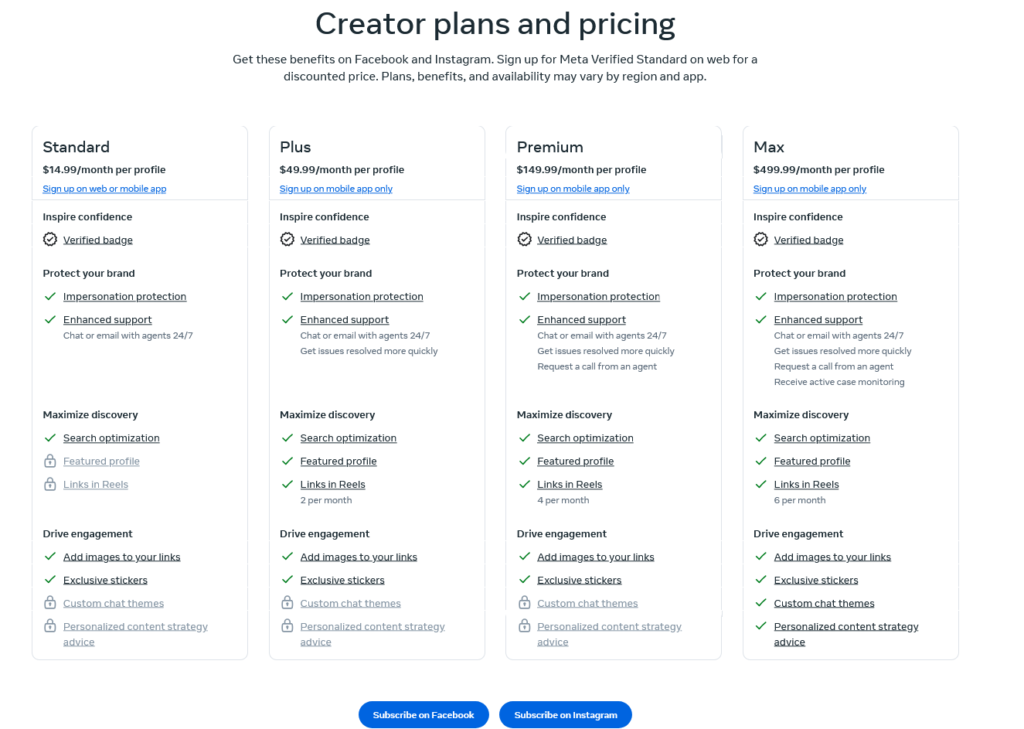
Meta Verified for businesses currently starts at $14.99 per month and ranges up to $499 per month, depending on the package, and posting more links may soon be one of the incentives tied to those plans.
It’s also worth noting:
- Publisher Pages are not included in this test (as of now)
- Meta has emphasized that this is exploratory, not permanent
- The test is focused on organic feed posts, not ads
Still, this update reinforces an important truth: Meta is not optimizing for your traffic; it’s optimizing for its ecosystem.
Why the Panic Is Overblown
Let’s be honest, I’ve been teaching smart link strategies on Facebook since at least 2016, long before Meta ever put official words to these behaviors or started testing paid link privileges.
You can post links. The key isn’t whether you can link, it’s where and how you link.
Meta is increasingly nudging creators and businesses toward paid features and new link-sharing behaviors across its platforms. Many creators who rely on sharing links to their blogs or other platforms are affected by these changes, as Meta’s restrictions can limit organic reach and engagement. Meta platforms, including Facebook and other Meta platforms like Instagram and WhatsApp, form a connected ecosystem for content distribution, so cross-platform sharing and native content posting are more important than ever.
Other platforms, such as YouTube, TikTok, and GoFundMe, remain important for link-sharing strategies and can help diversify your audience reach.
Even if Meta expands this test, the underlying strategy doesn’t change. This isn’t a “ban.” It’s simply formalizing long‑standing algorithmic preferences and adding a monetization layer for businesses that rely heavily on outbound traffic.
Link Placement Explained: Post vs. Comment
Here’s the reality:
While Facebook has tightened restrictions on posting certain external links directly in posts, you can still include links in the comments section. This means you can post affiliate links in comments or shares, allowing you to continue leveraging affiliate marketing strategies even with the new limitations. This workaround is especially useful for creators and brands who rely on external links for revenue and audience engagement.
❌ Placing the Link in the Caption
- Facebook may deprioritize these posts, reducing reach.
- Most highly viewed posts do not include external links.
- Meta’s Professional Dashboard even suggests adding links in the first comment instead of the caption.
✔️ Placing the Link in the Comments
- Facebook doesn’t currently restrict comment links.
- Link‑in‑comment posts still let users get the URL but without hurting reach as much.
- The link serves the conversion, not the reach.
This distinction is a subtle but massive strategic shift.
Why Facebook Doesn’t Love Links in Posts
Facebook is a global social networking platform owned by Meta, connecting over 3 billion monthly active users as of 2025. Users build a network by sending “Friend Requests” or following Pages, and interactions from friends, groups, and pages influence link sharing and post views. Facebook’s algorithm has always favored content that keeps people on the platform. When a post contains an external link in the caption, it signals that users are about to leave Facebook, and that’s precisely what the algorithm tries to avoid.
Meta is currently testing whether the ability to share more external links should serve as a trust signal for verified accounts. This evaluation plays directly into the current test of Facebook’s link-sharing limit, which restricts how many external links can be included in organic posts by non-verified users. The idea is that verified users are more likely to share high-quality, credible content and Facebook’s link-sharing limit helps Meta prioritize that content in the feed.
This approach has broader implications. The shift caused by Facebook’s link-sharing limit is already impacting search visibility, organic reach, and distribution strategies for business pages. By restricting external links, Meta is subtly nudging creators and businesses to adapt their content strategies or pay for Meta Verified to lift those limitations.
From Meta’s perspective, Facebook’s link-sharing limit is a low-risk, high-reward move. According to the platform’s own data, external link posts receive only a small fraction of feed views compared to native content. That means enforcing Facebook’s link-sharing limit doesn’t significantly hurt engagement metrics, but it does open the door to a new revenue stream through paid link privileges.
The reality is that shares from friends and groups make up a smaller piece of link-based traffic compared to posts by Pages and verified accounts. So Facebook’s link-sharing limit allows Meta to curb spammy, low-quality linking while incentivizing more thoughtful, native-first content creation.
This test isn’t about punishing creators, it’s about shaping platform behavior. By enforcing Facebook’s link-sharing limit, Meta is encouraging content that keeps users on-platform longer, instead of sending them offsite. In essence, link sharing is no longer a neutral action, it’s a signal of value, and a potential paid privilege.
Meta’s data reinforces this: more than 98% of U.S. feed views come from posts without external links. So in many ways, Facebook’s link-sharing limit simply confirms what smart marketers have known for years, that the algorithm favors conversation and content that sparks engagement, not outbound traffic.
The Right Strategy: Engagement First, Links Later
Here’s what works and what I’ve taught my community– for years, especially in light of Facebook’s link-sharing limit.
Links still add real value to your posts by giving your audience access to deeper resources, offers, and next steps. However, Facebook’s link-sharing limit now restricts how many feed posts with external links non‑verified users can publish each month. That means it’s become harder to rely on frequent link posts unless you subscribe to Meta Verified.
Meta is testing whether allowing an increased volume of link posts should be positioned as a premium benefit. The idea is that paying subscribers get more flexibility, while non‑verified users are encouraged to focus on engagement-first content. In this context, Facebook’s link-sharing limit isn’t just about limiting links, it’s about reshaping how creators and businesses drive attention and interaction on the platform.
By understanding Facebook’s link-sharing limit and adjusting your strategy accordingly, you can still use links effectively — just more intentionally. When links are used strategically, after engagement has already started, they enhance the experience instead of hurting reach. That’s the shift Meta is nudging everyone toward, whether you’re verified or not.
1. Lead With a Conversation
Post something designed to spark comments, a question, a story, or a bold opinion.
Example:
“I just discovered a strategy that doubled my reach… curious if you’ve tried this?”
The goal isn’t traffic, it’s engagement.
2. Collect Engagement First
Facebook rewards conversation.
No interaction = no reach.
No reach = no eyeballs on your offer.
Ask a question. Invite responses. Get a debate going.
3. Drop the Link After the Chat Starts
Once people are responding:
✔ Drop the link in the comments
✔ Or send it via DM
✔ Or pin it to the top comment
This ordering, engagement first, link second, aligns with Meta’s evolving preferences.
Whether Meta expands the paid link test or not, this strategy future‑proofs your content. When conversation is the entry point, links become optional, not essential, and your visibility no longer depends on policy changes you can’t control.
Examples of High‑Performing Link Share Tactics
| Post Type | Example Post | Link Placement | Strategic Benefit |
| Comment Hook | “Which part of online marketing feels hardest right now?” | In comment | Engagement drives reach, link drives results |
| Story + CTA | “I thought link posts had no reach … here’s what actually works.” | In comment | Education + curiosity beat pure links |
| Pin the Link | Ask a question, gather responses, then post and pin the link | Pinned top comment | People find it organically after interacting |
Frequently Asked Questions
Does Facebook now ban link posts?
No. You can still share links; it’s the placement of them that affects reach.
Can I post unlimited links in comments?
Yes, links in comments aren’t currently restricted.
What counts as a link post?
A post with a visible URL in the caption pointing to an external site.
Does this apply to ads?
No. Ads and boosted posts are separate.
Do affiliate links count?
Affiliate links are allowable and not limited by the “two‑link” rule.
Should I stop sharing links entirely?
No. Just rethink how and where you share them. Engagement drives visibility.
Will this affect groups?
Link behavior in groups may differ; always monitor reach and adjust.
Is this permanent?
Facebook is testing, but the trend toward favoring engagement signals is consistent.
Why is Meta charging me on Facebook?
Meta is introducing paid features like Meta Verified to enhance user experience and provide additional benefits — one of the most talked-about being Facebook’s link-sharing limit. As part of its recent test, Meta is now restricting non-verified users to just two link-containing posts per month on Facebook. This is a key part of the platform’s evolving monetization strategy.
By subscribing to Meta Verified, users unlock exclusive perks designed to bypass Facebook’s link-sharing limit, such as:
• Increased link-posting capacity beyond the standard two-link cap.
• A verified badge that enhances trust and visibility across the platform.
• Additional support features, including protection from impersonation and direct customer service access.
Ultimately, Facebook’s link-sharing limit is a signal that Meta is shifting toward premium content privileges. This move reflects a broader effort to monetize core platform functions while pushing creators and
Does Facebook restrict posts with links?
Yes. Facebook’s link-sharing limit is now being tested across certain accounts. Facebook has implemented restrictions on how many organic posts containing external links some users can share, especially those without a Meta Verified subscription. Under Facebook’s link-sharing limit, certain profiles and Pages using professional mode are currently limited to posting only two link-containing posts per month as part of a controlled test.
That said, Facebook’s link-sharing limit does not apply to all types of links or posting methods. Even with this restriction in place:
• Users can still post affiliate links, include links in the comments, and share links to other Meta platforms like Instagram and WhatsApp without restrictions.
• Ads and boosted posts are not affected by Facebook’s link-sharing limit.
• News publishers are not included in this test at this time.
The goal behind Facebook’s link-sharing limit is to reduce low-quality or spam-heavy link posts and encourage more engagement-focused content. Rather than rewarding outbound traffic, Facebook continues to prioritize conversations, comments, and on-platform interaction — and this limit reinforces that long-standing strategy.
What is the Facebook strategy for 2025?
Facebook’s 2025 strategy centers on fostering meaningful engagement within its platform while balancing content distribution and monetization. Key elements include:
• Prioritizing content that keeps users on Facebook and other Meta platforms, reducing emphasis on outbound links.
• Testing paid features like Meta Verified to offer enhanced capabilities and drive subscription revenue.
• Encouraging creators and businesses to focus on engagement-first strategies, such as sparking conversations before sharing links.
• Expanding video content formats like Reels to capture user attention.
• Enhancing privacy and security with features like Passkeys and privacy-first group interactions.
Overall, Facebook aims to create a vibrant, interactive community that benefits creators, businesses, and users alike.
What’s going on with the Facebook algorithm?
The Facebook algorithm in 2025 continues to evolve with a strong focus on promoting content that generates meaningful interactions and keeps users engaged on the platform. Key algorithm priorities include:
• Favoring posts that spark comments, shares, and reactions over those with outbound links.
• Reducing reach for posts containing external links in captions, while allowing links in comments without penalty.
• Giving verified accounts and Meta Verified subscribers potential trust signals that may improve their content’s visibility.
• Utilizing AI-driven personalization to tailor the News Feed with content from friends, groups, Pages, and recommended sources.
• Supporting video-first formats like Reels to maximize user engagement.
Understanding these algorithm dynamics helps creators and businesses optimize their content strategies to maintain visibility and grow their audience on Facebook.
Recommended Tools + Resources
- Facebook Professional Dashboard — for performance insights
- Social Media Analytics (native FB tools) — to track reach
- Comment management tools — to pin/deliver links
- Content calendars — to plan engagement‑first posts
- Meta Verified (if you rely heavily on link posts) — for more link slots.
Final Summary
Facebook’s “two‑link rule” isn’t a ban; it’s an evolution of a trend that’s been happening for years. Links in post captions have been losing reach as Meta prioritizes on‑platform engagement.
The good news is that you can still share links, just in smarter ways:
- Spark a conversation first
- Use comment placement
- Engage humans before sending to external pages
- Treat your two allowable link posts per month as strategic high‑value moments
When you adjust your strategy this way, you don’t lose reach, you build real engagement and drive real results.
The possibility of paying to post links doesn’t change the strategy. Conversation has always been the currency on Facebook, and now Meta is making that more explicit than ever.
Your Next Step
Want live guidance on applying this strategy to your Facebook content?
Join my free training, Create Your AI‑Powered Social Selling Circle, where I’ll walk you through how to turn engagement into sales step by step.


Leave a Reply