
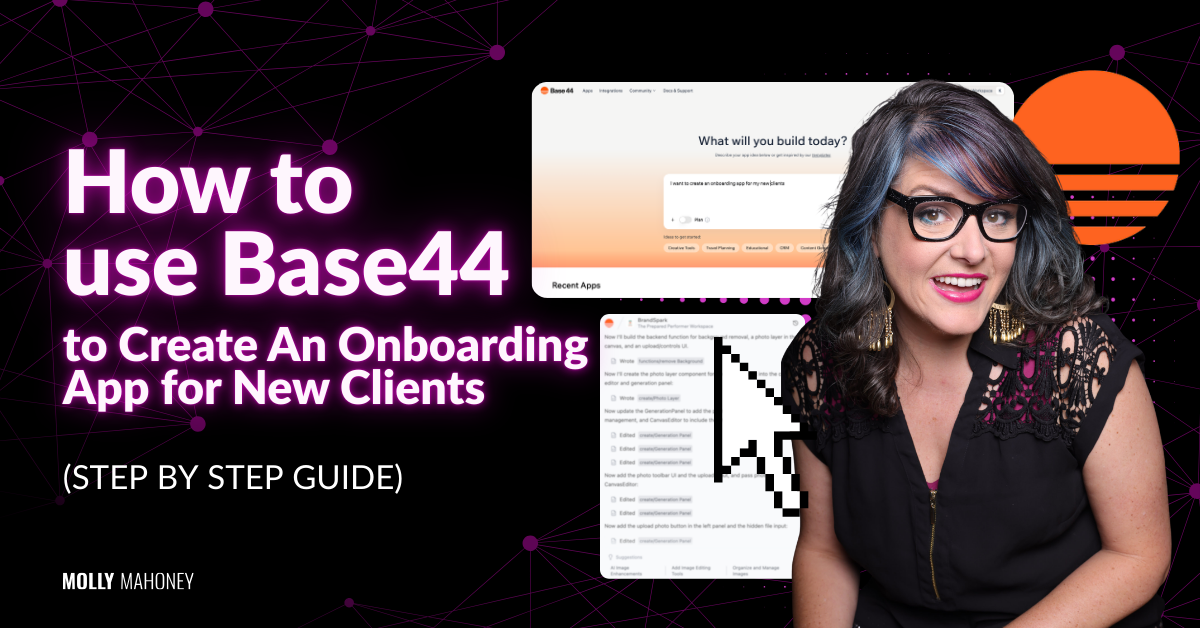

A personalized onboarding experience built with Base44 is not just a welcome sequence. It is the strategic bridge between someone saying yes and someone becoming fully committed.
It is a structured, interactive process that begins the moment payment is made and guides new clients based on their specific goals, challenges, and intentions. Instead of sending generic login details or a templated PDF, you create dynamic next steps that reflect each person back to themselves. They do not just receive access. They receive clarity, direction, and reassurance.
While employee onboarding integrates new team members and standard customer onboarding introduces people to a product, a personalized customer onboarding experience goes deeper. It ensures clients feel understood, supported, and confident from the very first interaction. It sets expectations, establishes momentum, and anchors trust before doubt has space to grow.
Customer onboarding is important because it shapes the entire client journey. It educates clients on how to engage effectively, reduces buyer’s remorse, increases retention, and builds the foundation for long-term loyalty. Effective onboarding helps clients succeed faster, which strengthens the relationship and deepens their investment in the outcome. Whether supported by automation, a customer success team, or both, the goal remains the same: guide them early so they stay engaged long term.
Best practices for onboarding new clients combine personalization, automation, and proactive communication.
Who This Guide Is For
This guide is for you if you sell transformation and care about what happens after the sale. If you lead masterminds, host, run programs, or offer high-ticket services and want your clients to feel confident from day one, this is for you.
Key Takeaways
- A personalized onboarding experience increases client engagement before your event or program begins.
- Generic “Start Here” portals often overwhelm people and reduce momentum.
- The post-purchase window is psychologically sensitive and needs intentional guidance.
- Interactive intake pathways create nervous system safety and commitment.
- Tools like Base44 allow you to build dynamic onboarding without hiring a developer.
- Personalization strengthens testimonials, retention, referrals, and authority.
Table of Contents
Why Is Onboarding a Critical Part of the Client Journey?
Most entrepreneurs focus on marketing and sales. And I get it. That’s the visible part. That’s where revenue happens. But what happens next is just as important, especially for new customers. Creating a smooth onboarding experience for new customers is essential to ensure they feel welcomed, supported, and confident in their decision.
We nurture leads. We host webinars. We answer objections. We hold sales calls. Then they say yes.
And then?
We send a confirmation email.
Maybe a receipt. Maybe a welcome video. Maybe a login link with a portal that says “Start Here.”
From our side, that feels complete.
From their side, it often feels unclear.
They are excited. They are hopeful. But they are also slightly disoriented. The adrenaline fades. Their brain starts scanning for reassurance. They are asking silently, “Did I make the right decision?” This is why customer onboarding is important: it educates new customers on how to use your product or service effectively, builds trust, and increases engagement right from the start.
That moment matters more than most people realize. A well-designed onboarding process helps set clear expectations, reducing uncertainty and building trust from the very beginning.
The personalized onboarding experience is where you anchor certainty.
Creating a smooth client onboarding experience is essential for building trust, reducing early churn, and accelerating time-to-value.
If you skip this, you leave emotional space for doubt. If you design this intentionally, you build momentum. Onboarding also sets the foundation for a lasting relationship, ensuring your clients feel valued and connected for the long term.
Providing ongoing support during onboarding is crucial so clients feel guided and confident as they integrate into your programs or services.
What Happens After Someone Buys?
Let’s talk about the nervous system for a second.
When someone invests money, especially in a high-ticket event or mastermind, their body goes through a micro stress response. Even if they are excited, there is vulnerability involved.
They just made a decision. They committed. They spent money.
There is a predictable pattern:
- Excitement
- Relief
- Doubt
That doubt is not because they don’t trust you. It’s because the brain wants confirmation.
If there is no immediate clarity about what to do next, energy drops.
I see this all the time. When onboarding is vague, clients disengage before the program even begins. They show up less prepared. They participate less deeply. And then the results suffer.
A personalized onboarding experience interrupts this pattern by immediately giving direction.
What Is Identity-Based Onboarding?
I call this identity-based onboarding because it goes beyond a standard client onboarding process. Identity-based onboarding is a personalized onboarding experience that reflects your client’s current reality and desired transformation back to them before they even begin your program or service.
In a traditional customer onboarding process, you introduce the curriculum, explain the portal, and outline the schedule. That is helpful, but it is generic. Identity-based onboarding takes it one step further. Instead of saying, “Here is the curriculum,” I say, “Here is your starting point based on what you shared.” That shift moves onboarding from information delivery to strategic alignment.
When I design an identity-based onboarding experience, I begin by asking intentional questions about goals, challenges, fears, and expectations. Then I use those answers to guide the client’s next steps. This creates clarity inside the client journey. It reduces overwhelm. It increases engagement from day one.
There is also a psychological layer here. When someone receives guidance that feels tailored to them, their nervous system relaxes. They feel understood. They feel seen. In a crowded market, that feeling is rare. And when clients feel seen, retention increases. Participation deepens. Results improve.
Identity-based onboarding is not about adding more technology. It is about listening carefully and responding clearly. It strengthens your personalized onboarding experience and builds trust before your program even officially begins.
Pre-Onboarding Preparation
Most companies believe onboarding starts on day one. I disagree.
In my experience, the most effective onboarding process begins before a new employee or customer ever logs in, shows up, or opens their first welcome email. This is where pre-onboarding comes in. And when it is done well, it changes everything.
Pre-onboarding is the preparation that happens before the official onboarding process begins. It is the thoughtful groundwork you lay to make sure someone feels welcomed, informed, and confident before their first day. It is not about rushing to put together a welcome packet at the last minute. It is about planning ahead with intention.
When I talk about pre-onboarding, I mean clear communication, prepared resources, and organized logistics. For employees, this includes having equipment ready, setting up their workspace, confirming access to systems, and outlining expectations. Whether the role is remote or on-site, planning these details matters. For customers, it means sending clear next steps, setting expectations, and providing guidance before the official start date.
Logistics are important because they remove stress. When someone arrives, and everything is ready, they feel valued. They feel respected. They feel like they matter.
But the real impact of pre-onboarding is emotional. It reduces first-day anxiety. It builds trust early. It shows that your organization is prepared and intentional.
Pre-onboarding is not about checking boxes. It is about setting the tone. When you invest in preparation before day one, you create momentum before the official onboarding process even begins.
And that makes a lasting difference.
What Does a Personalized Onboarding Experience Look Like?
A personalized onboarding experience replaces static instructions with interactive guidance. This is the foundation of effective customer onboarding, which guides new customers through a structured process to ensure they feel supported and confident from the start. There are different onboarding models, such as low-touch, high-touch, and asynchronous models, and selecting the right model depends on your client’s needs, the complexity of your service, and the level of engagement required.
Instead of:
- One-fits-all PDFs
- Overloaded portals
- Generic welcome videos
You create:
- Thoughtful intake questions
- Dynamic next steps
- Tailored preparation plans
Using a client portal or project management tool helps centralize all communication, documents, and task tracking for both you and your new customers. Creating a checklist ensures a repeatable and consistent onboarding process for every new client. A client onboarding checklist helps establish the baseline requirements for successful onboarding. Use a questionnaire or intake form to understand the specific problems clients are trying to solve. Additionally, collecting customer data during onboarding allows you to tailor future interactions and improve the overall customer experience.
Interactive onboarding pathways empower users to engage with the process in a way that feels intuitive and supportive.
Let me give you a practical example.
How to Build a Personalized Onboarding Experience (Step-by-Step Framework)
If you want Base44 to improve your client onboarding experience, you cannot start by clicking buttons. You start with clarity. Base44 amplifies structure. It does not replace it.
Here is how I recommend building a Base44-powered onboarding system step by step.
Before you log into Base44, define the transformation your program delivers. This is the foundation. If you are unclear about the outcome, your onboarding app will feel scattered.
Get specific about:
- The transformation you promise
- The 3–5 common starting challenges clients bring
- The emotional fears or doubts they experience after purchase
This step matters because Base44 runs on logic. The stronger your inputs, the stronger your outputs.
For example, if you run a mastermind, your common starting challenges might include pricing confidence, visibility, leadership, or team structure. If you host programs, it might include clarity, burnout, or business strategy confusion.
Document these clearly. Each of these becomes a potential pathway inside your Base44 onboarding app.
Base44 works best when you design intentional pathways instead of uploading random content. Structure first. Software second.
Now open Base44 and create a dedicated onboarding app.
Instead of sending clients to a static portal, you guide them through a short interactive intake experience. This intake is not just data collection. It is emotional anchoring.
Add structured questions such as:
- What feels most urgent right now?
- What result would make this experience a success?
- Where are you currently stuck?
- What has not worked for you in the past?
Keep the flow simple. Five to eight strong questions are usually enough.
Here is where Base44 becomes powerful. You can connect each answer to conditional logic. That means different responses trigger different pathways. The experience adapts based on what the client shares.
This is the shift from static onboarding to dynamic onboarding.
Instead of telling everyone to start at Module 1, you guide each client to their best starting point.

This is the core feature that makes Base44 valuable.
For each common challenge you identified in Step 1, build a structured response pathway.
Each pathway can include:
- A personalized prep checklist
- A recommended starting module or session
- Custom journaling or reflection prompts
- A short encouragement message
- Suggested priorities before your first live call
For example, if someone selects “pricing confidence” as their biggest struggle, Base44 can automatically deliver:
- A pricing audit worksheet
- Three journaling prompts around money beliefs
- A note directing them to a specific training
- A short message reinforcing their decision
If someone selects “visibility,” they receive a completely different sequence.
You build this once. Base44 runs the logic every time.
This ensures consistency. It ensures personalization. And it removes manual follow-up work from your plate.

Momentum is highest at the moment of payment. This is when clients are most engaged and most vulnerable to doubt.
Connect your purchase flow directly to your Base44 onboarding app. As soon as someone completes payment, they are redirected to onboarding.
The experience should look like this:
- They receive access immediately
- They complete the interactive intake
- They receive tailored next steps instantly
There is no waiting. No confusion. No wondering where to begin.
Immediate direction reduces post-purchase doubt. It increases early engagement. It creates movement before your program even begins.
This step alone can significantly improve retention and participation.
One of the most overlooked advantages of using Base44 is the data.
You are no longer guessing what clients struggle with. You can monitor:
- Completion rates
- Most common selected challenges
- Drop-off points inside onboarding
- Engagement before live sessions
This information is strategic.
If 60 percent of clients select pricing confidence, that tells you something about your messaging. If many clients abandon onboarding halfway through, you know to simplify the flow.
Use this data to refine:
- Your curriculum
- Your onboarding questions
- Your sales positioning
- Your content themes
Onboarding becomes a feedback loop instead of a one-time administrative step.
When used intentionally, Base44 does more than automate onboarding. It structures clarity. It scales attentiveness. It ensures every client feels guided from day one, even as your business grows.
That is how you turn onboarding into a competitive advantage instead of a checklist.
How Do Tools Like Base44 Help You Scale Personalization?
A few years ago, building something like this required a developer.
Now it does not.
Base44 is a no-code Ai tool that allows you to build interactive onboarding apps quickly. You upload your curriculum, details, and your philosophy. You design intake questions. Then the tool generates structured response pathways, similar to the way Ai can amplify your magic and support personalized experiences across your offers. Scalable onboarding processes like these are designed to be repeatable and resistant to human error, ensuring consistency and reliability as your company grows. Onboarding software and additional tools, such as compliance modules or mobile apps, can further enhance the onboarding experience by streamlining processes and ensuring legal compliance.
This removes overwhelm because clients are told exactly where to begin. It reduces hesitation because clarity is delivered immediately. It eliminates inconsistency because the logic runs the same way every time, regardless of how many clients you onboard.
You upload your curriculum, framework, and preparation materials once. Then you design response pathways that match your most typical client starting points. If someone selects pricing confidence as their biggest struggle, they receive a specific prep plan. If someone selects visibility or leadership, they receive a different one. The experience feels personal, but the system is scalable.
You can create:
- Personalized prep checklists
- Custom journaling prompts
- Suggested session priorities
- Engagement tracking
The benefits extend beyond convenience.
Base44 reduces decision fatigue for your clients. It shortens the time between purchase and action. It increases pre-program engagement because clients feel guided instead of lost. It also gives you insight. You can see patterns in client challenges. You can track completion. You can refine your curriculum based on real data instead of assumptions.
Most importantly, this does not remove your humanity. It removes friction.
You are not replacing connection with automation. You are reinforcing the connection with clarity. Base44 gives you the infrastructure to scale attentiveness. It ensures that every client feels seen, even as your business grows.
When onboarding is intentional, structured, and personalized, it becomes more than a welcome process. It becomes a strategic advantage.
What Are the Business Benefits of a Personalized Onboarding Experience?
Let’s talk about impact.
When you implement a personalized onboarding experience, you typically see:
- Higher engagement before the program begins
- More prepared participants
- Faster depth during live sessions
- More specific testimonials
- Increased retention
- More referrals
Successful onboarding not only improves immediate engagement but also lays the foundation for a lasting relationship with your clients. Continuous engagement is required beyond the initial login for successful onboarding, ensuring clients remain connected and supported throughout their journey.
In a saturated market, differentiation does not come from louder marketing. It comes from better experience design.
Authority today is about precision, and the most effective leaders pair precise onboarding with authentic AI-powered marketing for experts that reflects their unique voice.
Common Mistakes to Avoid
1. Overloading With Content
More content does not equal more value. Focus on clarity, not quantity.
2. Treating Onboarding as Administrative
Onboarding is emotional. It is psychological. It is strategic.
3. Making It Overly Complex
Start small. One intake form. One personalized response. Expand later.
4. Ignoring Feedback Data
Use onboarding insights to improve messaging and delivery.
Frequently Asked Questions
What is a personalized onboarding experience?
It is an interactive, structured process that tailors next steps to each client after purchase.
Why does onboarding affect retention?
Because early clarity increases confidence and commitment.
How long should onboarding last?
From purchase until your program begins.
Do I need Ai tools to start?
No. You can personalize manually at first.
What types of businesses benefit most?
Coaches, leaders, consultants, and course creators.
Can this work for lower-priced offers?
Yes. Even simple personalization increases perceived value.
How detailed should intake questions be?
Focused and thoughtful, but not overwhelming.
Does personalization increase testimonials?
Yes. Specific preparation leads to specific results.
Is this complicated to implement?
Not if you start small and expand gradually.
What’s the biggest mindset shift?
Seeing onboarding as part of the transformation, not a logistics step.
Recommended Tools and Resources
- Base44 (Ai-powered app builder)
- Typeform or Tally (interactive intake forms)
- Circle or Kajabi (client portals)
- ConvertKit or ActiveCampaign (email automation)
Final Summary
The personalized onboarding experience begins the moment someone says yes.
- Generic portals create overwhelm.
- Interactive guidance creates safety.
- Tailored pathways create commitment.
When clients feel personally seen from day one, the transformation is already in motion.
Ready to Design Yours?
If you want help building a personalized onboarding experience that increases engagement, retention, and authority, explore Ai Content Club or join Ai Stars.
You do not need more content. You need smarter pathways, and it starts the moment they buy.



Leave a Reply